Every step of the road home, guided.
CalyxEra gives people with spinal cord injury a personal plan, a daily safety check-in and a guide they can trust, in the weeks when support is thinnest.
 Meet EmmaA friendly start, no account
- 2Get your planPaced across the days left
- 3Daily check-inTwo minutes, flags what matters
- 4Learn by doingRoutines as step-by-step pictures
- 5Home, confidentPeer support and badges
The first year at home is the riskiest.
- 36–55%of people with spinal cord injury are readmitted to hospital in the first year after discharge.
- ~$2Mestimated lifetime care cost per person, much of it linked to preventable complications.
- ~190traumatic injuries are discharged from inpatient rehab in Alberta each year, plus non-traumatic cases.
- 86,000Canadians live with a spinal cord injury, with about 4,500 new cases every year.
Sources: Guilcher et al., 2010; Krause et al., 1997 (readmission); Noonan et al., 2012 (prevalence, incidence and lifetime cost). Figures are estimates from the published literature.
Going home is one of the most overwhelming moments after a spinal cord injury.
Rehab stays have become shorter, so people leave with more to learn and less time to learn it. Then they are expected to coordinate everything on their own.
Too much, all at once
Equipment, physiotherapy, mental health, peer support, funding and emergency plans arrive together, from different places, on paper.
No one to ask on a Tuesday night
Small warning signs, like a red patch of skin or a bad headache, are easy to miss or to dismiss when no one is checking in.
Tools that don't fit
Generic health apps aren't built for the discharge window, and static directories don't know who you are, where you live or what you need.
One calm place for everything after discharge.
A mobile-first web app, in plain language, built for people who may be tired, anxious, or using a phone with limited hand control.
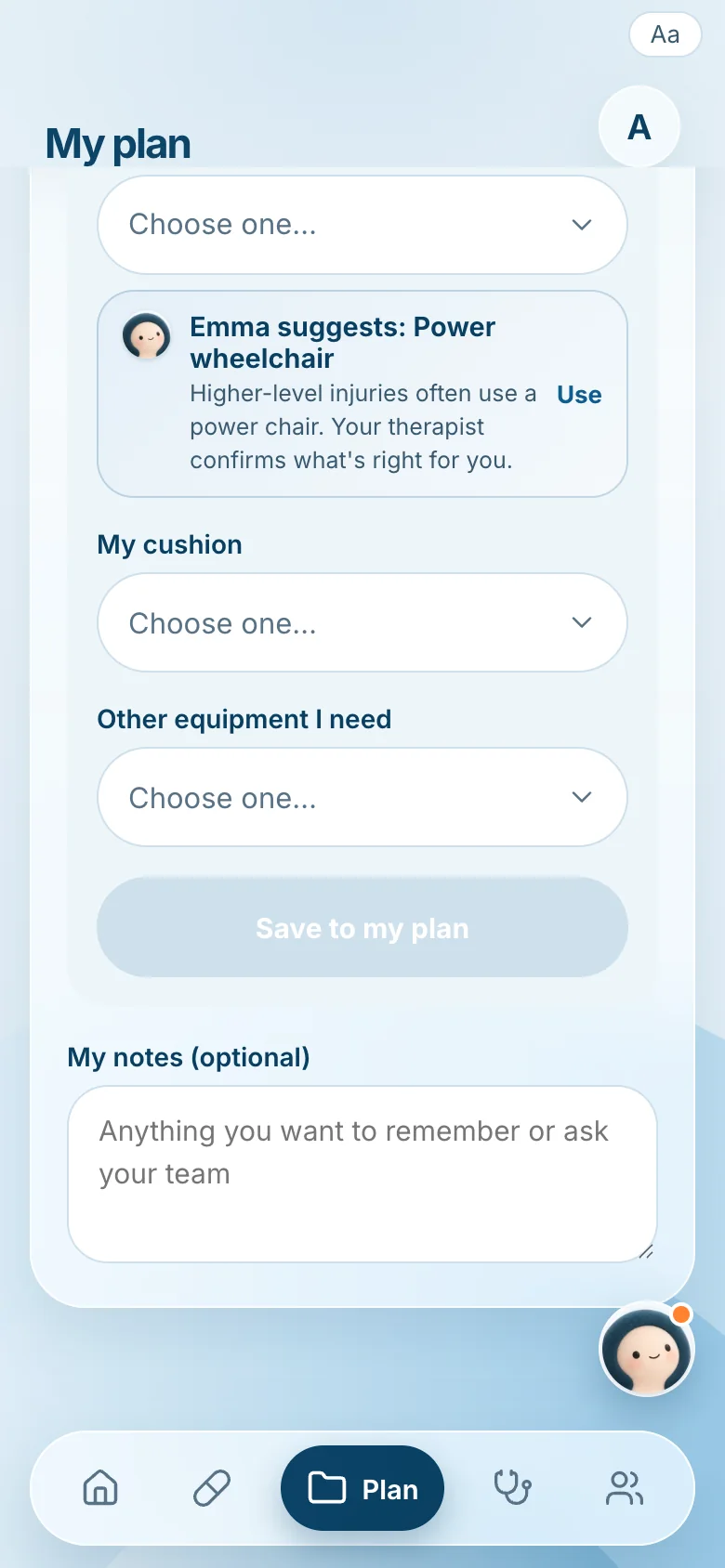
Personalised to the person, finished by the patient.
A short conversation with Emma, our onboarding guide, builds a plan around the person's injury and discharge date. Patients fill in their own details with dropdowns and suggestions, so nurses confirm instead of typing.
- One plan for daily care, wellbeing, and getting home
- Each topic has a checklist, notes, and a confidence rating
- Suggestions come from their own answers, with the reason shown
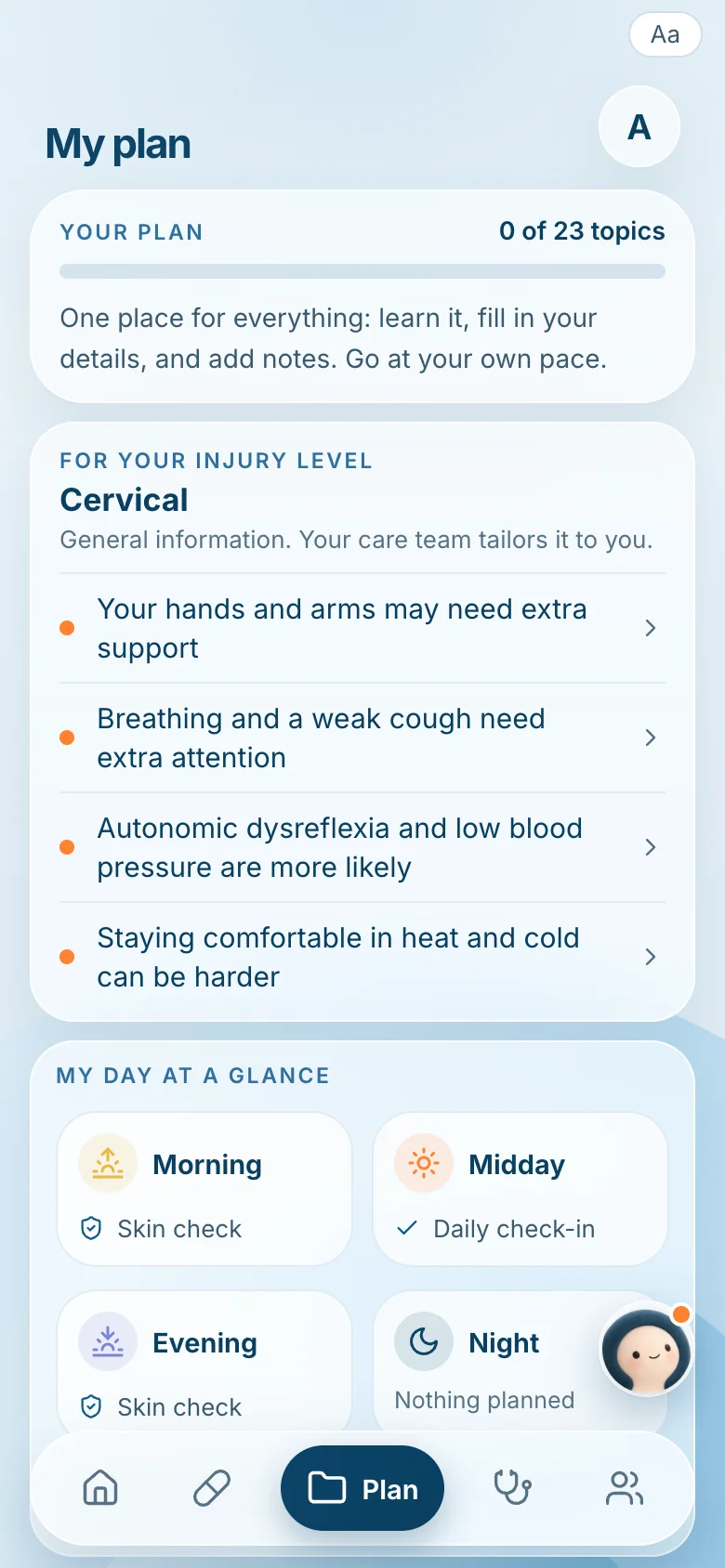
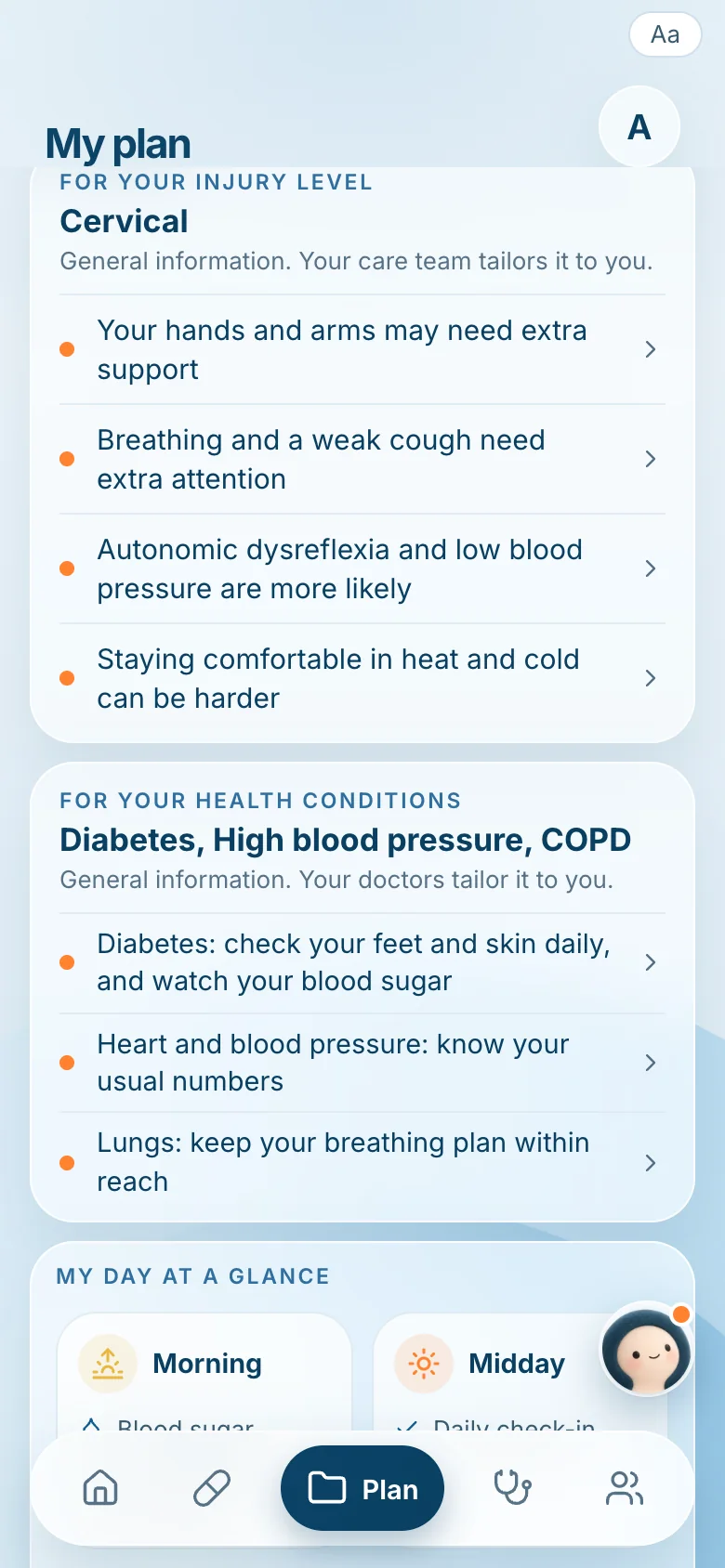
Tailored to the injury level and to other health conditions.
A cervical injury and a lumbar injury need different things, and so does someone who also lives with diabetes, heart disease, high blood pressure, COPD, kidney disease, depression or chronic pain. CalyxEra adapts the plan, the daily check-in and the reminders to match.
- Level-specific topics, such as hands and technology, body temperature, or standing and walking
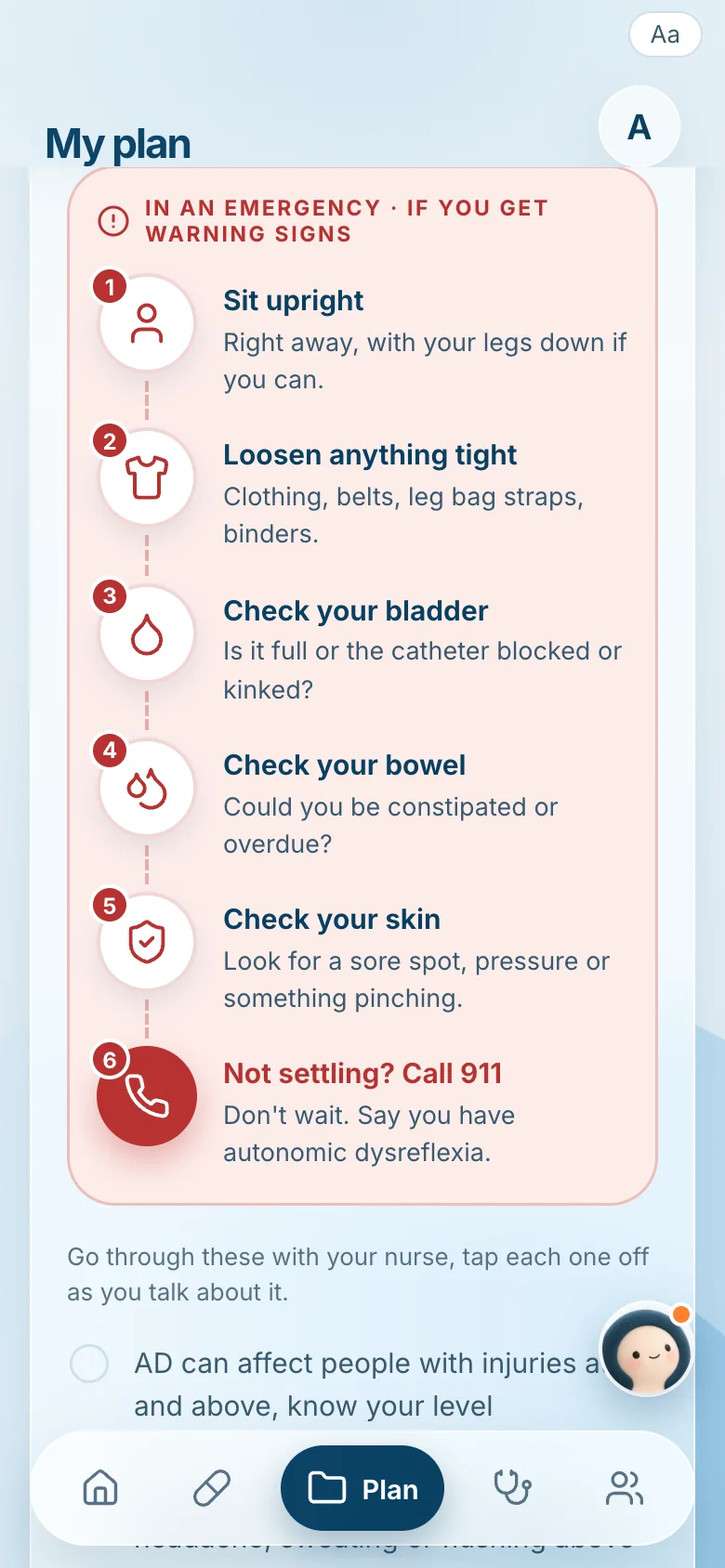
- Autonomic dysreflexia and blood pressure guidance only where it applies
- Extra check-in questions for blood sugar, heart or breathing when they matter
- Diet suggestions, the daily timeline and Emma's reminders adapt too
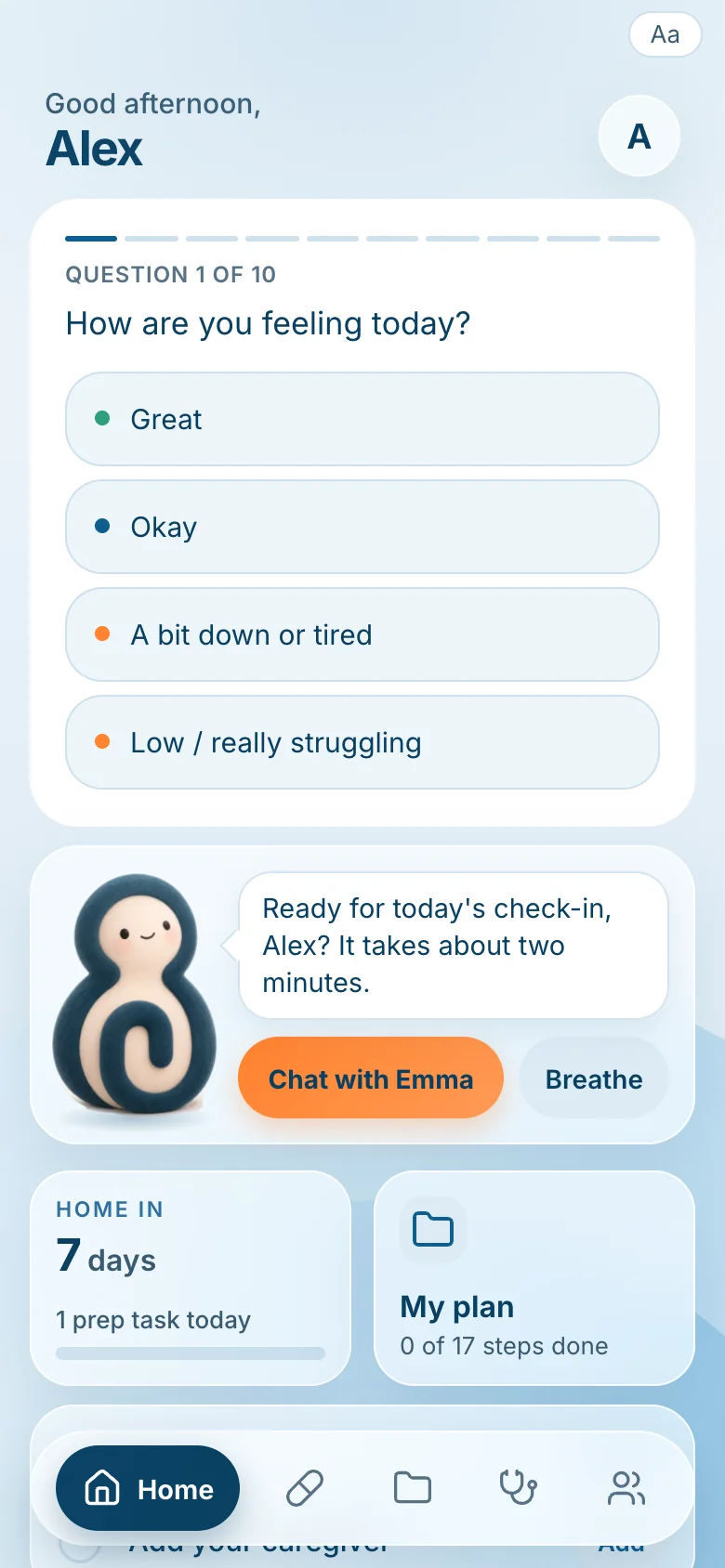
A two-minute check-in that knows what to ask next.
Short questions cover the things that matter after a spinal cord injury, such as mood, pain, skin, bladder, bowel, and warning signs of autonomic dysreflexia. A worrying answer adds focused follow-up questions straight away.
- Five levels of guidance, from emergency to all clear
- Urgent advice appears the moment it matters, not at the end
- Warm, plain wording, never a clinical checklist
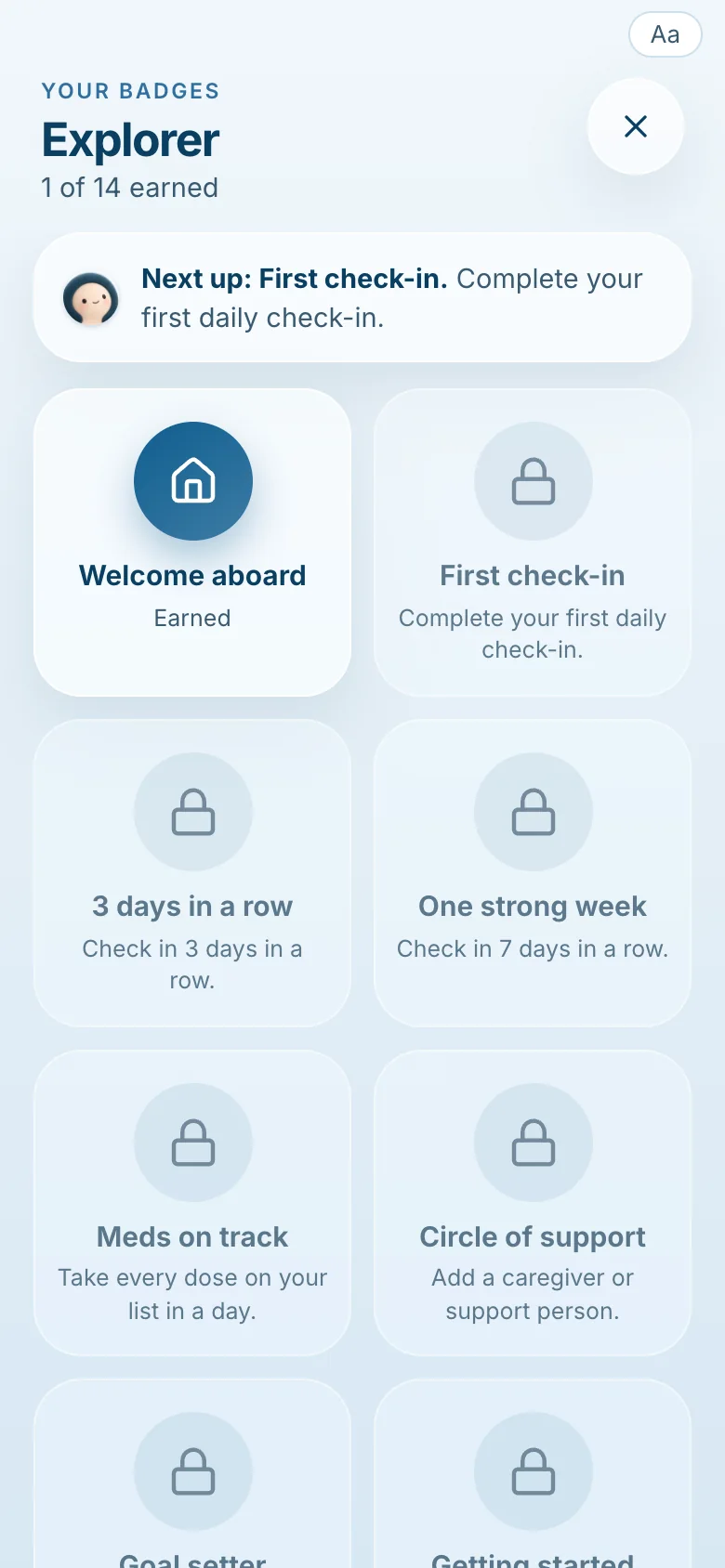
Small wins, celebrated. People who have been there.
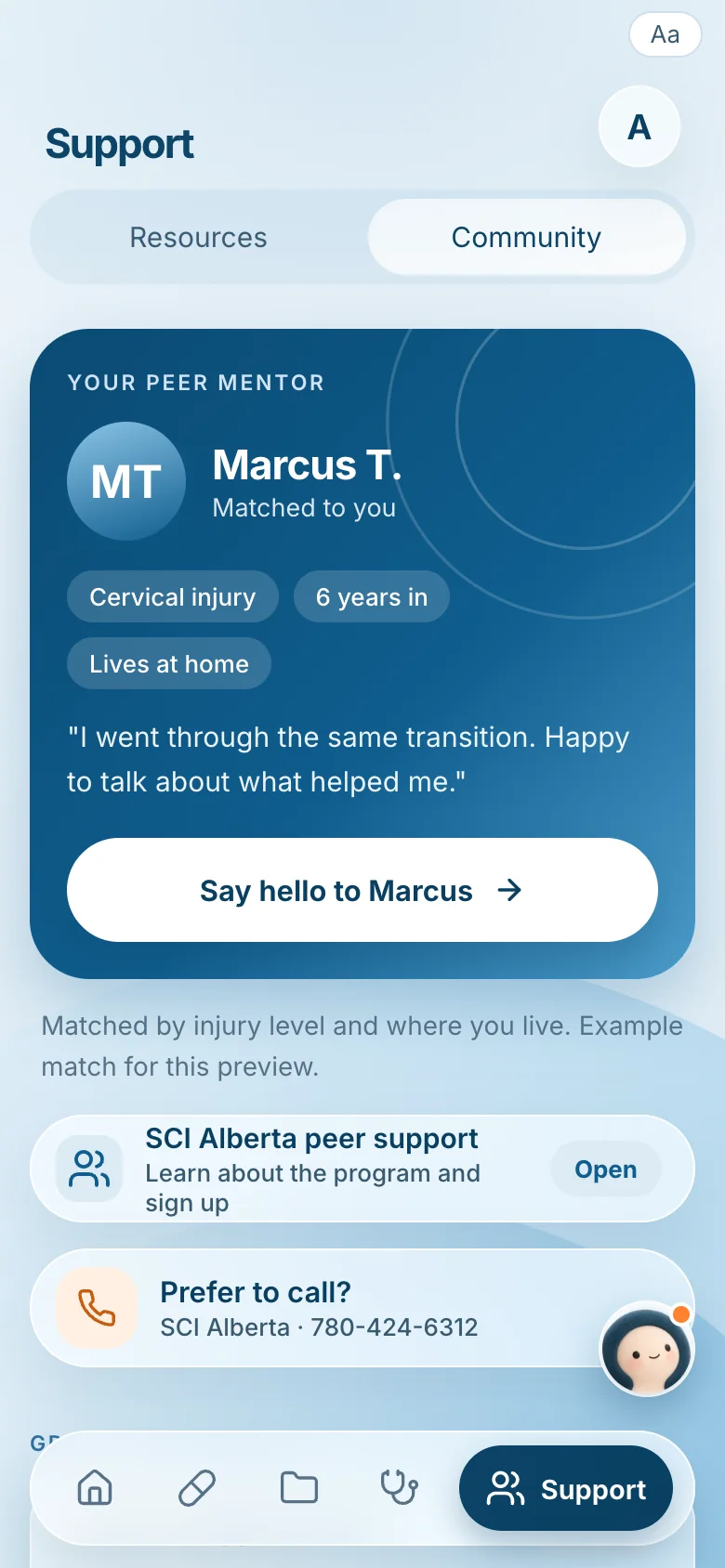
Badges recognise real progress and never take anything away. A matched peer mentor is one tap away, with direct links to community programs and the right booking pages, so no one has to hunt for them.
- Goals the patient chooses for themselves
- Peer support and community links in the app
- Caregivers can be added from the to-do list
Ask Emma anything
An assistant that answers from the patient's own plan and vetted sources, and sends them to their care team when it can't.
A to-do list that paces itself
Preparation tasks are spread across the days until discharge, so the list never piles up.
Resources with direct links
Funding programs, peer groups and appointment portals, each one a tap away.
Medications, tick by tick
Doses on a simple daily list, so it's easy to see what is done and what is left.
Notes on every topic
A place to write what to remember or ask the team, saved as you type.
A private cycle tracker
For women: log periods, see a gentle estimate, and read what can change after a spinal cord injury. It stays private.


A friendly guide, right there in the pocket.
Emma helps people through the first weeks home. Tap her to see how she greets people.
- Answers questions from the person's own plan and approved sources
- Gentle, personal reminders: a check-in, a skin check, some water
- Celebrates small wins, and breathes slowly with you when things feel heavy
- Knows her limits: she never diagnoses and always points back to the care team
From the hospital bed to the kitchen table.
Meet Emma
A friendly onboarding conversation captures the injury, the discharge timeline and what matters to the patient. No account is needed for the prototype.
Get a plan that paces itself
The app builds a plan and a to-do list across the days left, with caregivers, appointments and funding steps included.
Check in, learn, stay safe
Daily check-ins, step-by-step guides and peer support keep the patient confident at home, and surface problems early.
More time for the conversations that matter.
CalyxEra is designed to take work off the care team, not add to it. Patients and caregivers prepare in the app; clinicians review, correct and teach.
- Patients pre-fill their plan, so nurses confirm with one tap
- Patients arrive at visits prepared, with their questions written down
- Daily check-ins can show drift that a single visit would miss
- Content is generic and editable, ready for local pathways
| Today | With CalyxEra |
|---|---|
| Care plan typed into forms at the bedside, while the patient is overwhelmed. | The patient builds most of the plan themselves. The team reviews it. |
| A paper handout and a phone number. | One place with the plan, the routines and the right links. |
| Silence until the first follow-up. | A daily check-in, and a line of sight after discharge. |
Built so a clinician can see exactly why it said what it said.
Where the stakes are highest, we use plain rules a clinician can read. AI is kept to a supporting role.
Rules, not guesses, for safety
The daily check-in uses explicit, hand-written clinical rules across five levels of urgency. The same answers always give the same advice, and every recommendation can be audited.
AI with a narrow job
The assistant answers questions from the patient's plan and approved sources. It cannot change the plan, trigger alerts or give a diagnosis, and it always points back to the care team.
Privacy by design
No account is needed for the prototype. Saving answers for research is optional and needs consent. Our service is hosted in Montreal, and keys never live in the app.
Accessible from day one
Large tap targets, plain language, high contrast and a text-size button, because many users are tired, anxious, or have limited hand function.
Regulatory and privacy work is on our roadmap, including Alberta's Health Information Act, PIPEDA and Health Canada guidance on software as a medical device. CalyxEra is a prototype under evaluation, not a medical device.
Start with spinal cord injury. Grow into every hard discharge.
Spinal cord injury is our proof of concept. The navigation framework, onboarding and check-in engine are reusable, so other conditions mainly need new clinical content.
Health authority
Provincial or regional licensing, built into transition-of-care pathways.
Rehab centres
Hospital or rehabilitation-centre licences, per site or per discharge.
Grant or community funded
Deployment through community organisations and research funding.
These three pathways are being tested through customer discovery. We have not yet chosen one.
Phase 1 · Spinal cord injury, Alberta
- Validate with real patients and care teams
- Refine accessibility and safety logic
- Prove usability and value
Phase 2 · Across Canada
- Other spinal cord injury rehab centres
- French-language adaptation
- Indigenous-specific co-design
- Comparative effectiveness study
Phase 3 · Other conditions
- COPD, stroke, chronic kidney disease
- Same framework, new clinical content
- More rehabilitation partners
Clinical insight and engineering, together.
We started CalyxEra after seeing how overwhelming discharge can be for patients and families.

Yasaman Mashayekhi
MSc student, Physical Medicine and Rehabilitation, University of Alberta. Leads clinical content, study design and user research.

Anita Minootan
PhD student, Pharmaceutical Sciences, University of Alberta. Builds the platform, from onboarding to the check-in engine.
Questions, a demo, or ideas? Get in touch.
Ask a question, see CalyxEra in action, or tell us how you'd like to work together. We read every message.
Contact us
A question, a demo, or an idea for working together. We read every message.
Care teams and hospitals
Join the pilot, review the content, or shape how CalyxEra fits your discharge pathway.
Investors and funders
Hear the story, the evidence plan and what a first partnership could unlock.
Community groups
Co-design with us, especially for Indigenous and rural communities, and for peer support.